How long does an electrical safety certificate last? Find out when an EICR needs renewing in England and what a shorter inspection date means.
How Long Does an Electrical Safety Certificate Last?
There is no single expiry period that fits every electrical safety certificate. If by certificate you mean an Electrical Installation Condition Report (EICR), start with the report's recommended date for the next inspection and the rules applying to the property. In England, rented homes generally need the fixed installation inspected and tested at least every 5 years. A shorter interval written on the report must be followed.
For an owner-occupied home, 10 years is a commonly recommended maximum interval, rather than an automatic legal expiry date. The condition and use of the installation still matter. A report describes what was found on its inspection date; it cannot guarantee that damage, an alteration or a new fault will not occur the next day.
Is the Five-Year Rule the Same for Every Property?
The five-year requirement applies to electrical installations in private and social rented homes covered by the regulations in England.
The landlord must use a qualified person, obtain the report and arrange the next inspection no later than the date required. The inspector can specify an earlier date based on the installation's condition. A landlord should record that date immediately rather than assuming every EICR lasts exactly five calendar years.
According to the 2024 English Housing Survey housing-stock figures, England had about 4.9 million private rented dwellings and 4.2 million social rented dwellings. These are the broader housing sectors now covered by five-year installation-check duties, although specific tenancy exemptions and transition dates still need to be considered.

The date on a report should be easy to find. Put it in your property records with the inspector's observations, not only in a diary entry that may be lost.
If an inspection was limited because a circuit or area was inaccessible, discuss what remains unverified before relying on the report for another tenancy.
What if the EICR Specifies an Earlier Date?
Use the earlier date. The next inspection recommendation is a professional judgement about the installation that was actually examined. Age, deterioration, environmental conditions, previous defects and the intensity of use may justify a shorter interval. A report marked satisfactory today can still recommend reinspection sooner than the general maximum.
Look for the next inspection date on the report itself and ask the inspector to explain it if it is unclear. Keep a digital or paper reminder that gives enough time to arrange access and any necessary remedial work. Waiting until the last day leaves little room to deal with a failed appointment or a newly discovered defect.
Does a New Tenancy Mean You Need Another EICR?
Not automatically. Current government guidance for England says a new inspection is not required before reletting when an existing inspection was completed less than 5 years ago, the report does not require unresolved investigation or remedial work, and the installation remains safe. The landlord must give the incoming tenant a copy of the most recent report before occupation.
The guidance recommends at least a visual check before a new tenancy. If that check raises concern, or there is another reason to think the installation may no longer be safe, an earlier full inspection may be appropriate. This is more useful than treating a change of tenant as a mechanical reset of the five-year clock.
Does Remedial Work Extend the Report's Life?
A repair does not automatically add another five years to the original EICR. The report records the installation at the time of inspection; written confirmation after remedial work records the work completed. Keep both together so that a tenant or future inspector can follow the history. If substantial work changes the installation, ask the qualified electrician which certificate or further inspection is appropriate.
For a rented property, C1 or C2 observations and FI findings require action, even if the next routine inspection would otherwise be years away. C3 means an improvement is recommended and does not by itself make a report unsatisfactory. The report's codes and the electrician's explanation determine what happens next, not just the date printed on the front.
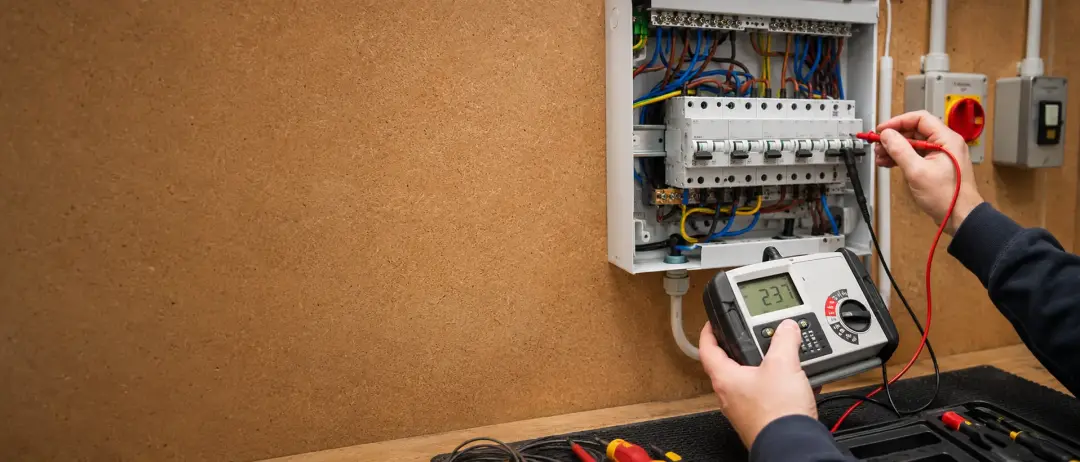
An electrician may issue a separate certificate for completed remedial work. Keep that evidence with the original EICR so the outcome is clear.
A new report is required by its own due date, even when previous repairs were satisfactory. Records of repairs support, but do not replace, the periodic inspection.
How Soon Must Landlords Deal With an Unsatisfactory Report?
Under the England rules, further investigation or remedial work identified on the report must normally be completed within 28 days of the inspection, or within a shorter period specified as necessary. The landlord must then provide the report and written confirmation of the work to the tenant and local council within 28 days of completion. Urgent danger should never be left for the outer limit simply because a 28-day period exists.
The report itself must be supplied to an existing tenant within 28 days of the inspection, to a new tenant before occupation and to a prospective tenant within 28 days of a request. If a local council requests it, the landlord has 7 days to provide it. These deadlines relate to sharing and acting on the report; they are separate from its next inspection date.
What About Owner-Occupied and Commercial Property?
For a privately owned home, IET consumer guidance recommends inspection and testing at a maximum frequency of once every 10 years. That is guidance for routine domestic inspection, not a promise that an older installation is safe for a decade. A new fault, flood damage, significant alteration or suspected poor workmanship can justify an earlier check.
Commercial premises do not have a universal EICR expiry that can be read from the rented-home rule. The appropriate interval depends on the installation, its use, the inspector's recommendation and the duty to maintain electrical systems safely. A shop, workshop or office should use its own report and competent advice rather than borrowing a domestic timetable.
How Can You Keep the Next Check on Track?
File the report, record the inspection date, the next inspection date and any outstanding observations. Keep repair certificates beside it. If you manage several properties, a single register makes it easier to spot upcoming inspections before they become urgent. Make sure the next inspector can see the previous report, including any restrictions and evidence of completed work.
For rental properties around Nottingham, Eco Energy Solutions Ltd can inspect the fixed installation and explain the result. The most useful question to ask after an EICR is not simply 'How long does it last?' but 'What date applies to this installation, and what work is needed before then?' That keeps the focus on the actual condition of the property.
If your next inspection date is approaching, explore our reporting service and arrange a check with enough time to act on the findings in Nottingham.