
Before installing an EV charger at home, establish that your parking, electrical supply and vehicle can work together. Choose equipment around your routine, then confirm permissions, controls and aftercare before ordering. For a household in Derby, the best decision is usually the one that makes everyday charging predictable, rather than the one with the biggest power rating.
Information checked: 20 October 2026.
Installing an EV Charger at Home in Derby
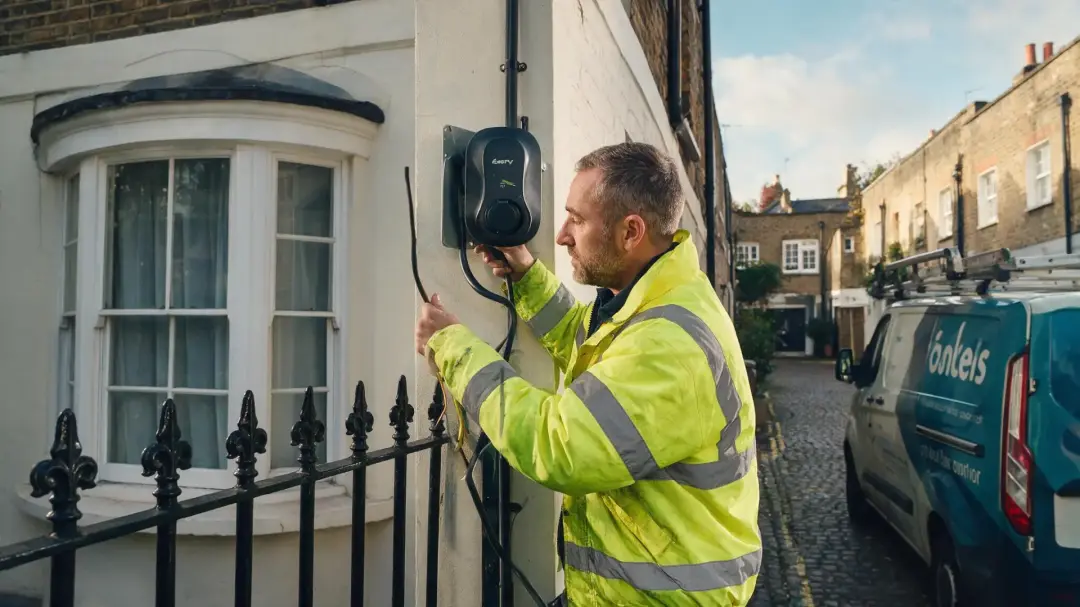
Begin with the parking arrangement. Consider who owns the space, whether you can normally use it and how the cable will reach the car without obstructing a route people need. A driveway, garage and allocated communal bay raise different questions. Establish those practical details before spending time comparing charger finishes or app screenshots.
Public charging can remain part of your routine even with a home unit. The Department for Transport’s July 2026 statistics recorded 121,171 public EV chargers across the UK. That national total does not establish local availability, reliability or suitability for your car. Check the facilities you actually use in Derby, particularly if your parking is shared or you regularly return home with little time before the next journey.
Match Charging Power to Your Daily Driving
Look at the vehicle’s maximum AC charging capability, how far you normally travel and how long the car remains parked. Charger output and battery capacity are different measurements: kW describes power, while kWh describes energy. A more powerful unit cannot make a vehicle accept energy faster than its own charging equipment allows.
The Energy Saving Trust’s home charging advice explains that available charging power, vehicle capability and battery size all affect charging time. Discuss a realistic overnight top-up with the installer rather than requesting the fastest unit by default. Many households do not arrive home with an empty battery every evening. Our charging-time article explores how those variables interact without promising the same result for every car.

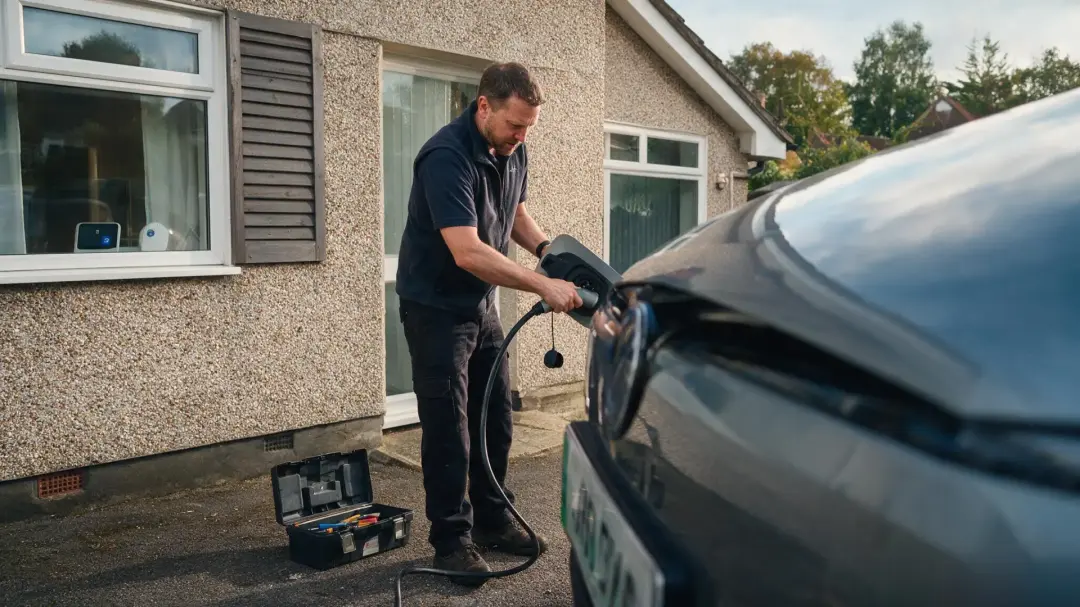
Cable storage should fit the way you park and connect your vehicle.
Understand Smart Controls Before Buying
Government smart chargepoint guidance covers relevant private chargers sold for domestic use in Great Britain. The requirements include smart functionality and consumer safeguards; however, compliance does not mean every model offers the same app, tariff integration or optional features. Request a demonstration of the functions you expect to use.
The smart chargepoint regulations also provide for a random delay of up to ten minutes in normal circumstances, with provisions for an override. A short wait can therefore be a control feature rather than a fault. Understand how the charger, vehicle and electricity supplier interact before activating schedules in several places. Ask which system should control charging, how to start an immediate session and what happens if the car’s own schedule conflicts with the charger.
Check Supply Capacity and Permissions Early
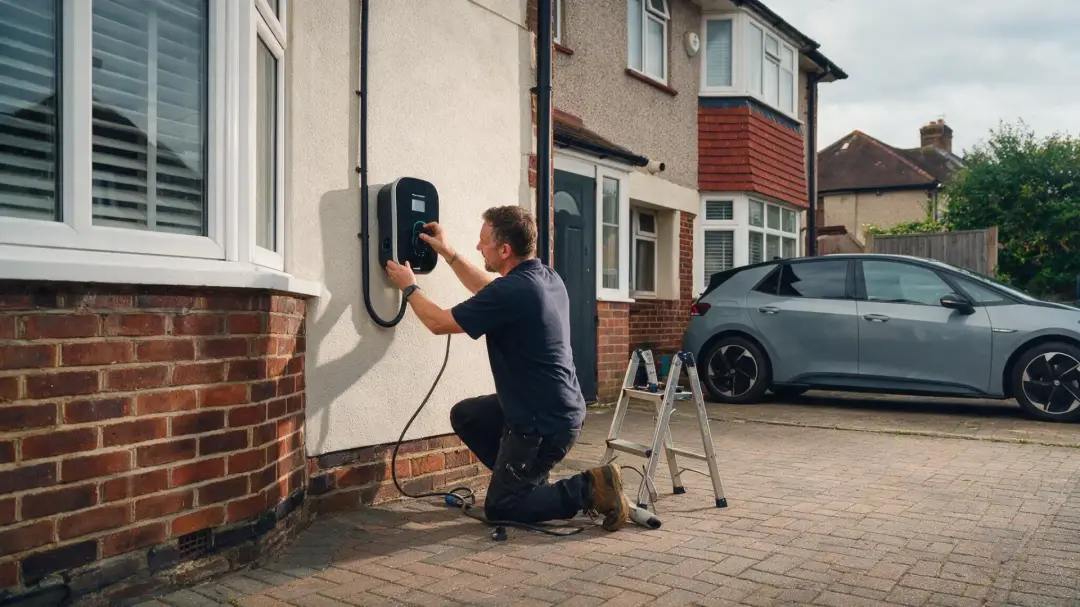
Tell the installer about major electrical loads such as a heat pump or electric shower, and mention planned changes. The assessment should consider the supply and the proposed charger together. Avoid selecting equipment on the assumption that unused space in the consumer unit proves the whole installation is suitable.
Check written permissions where someone else owns or manages the property or parking area. For a rented home, a shared access route or a flat, discuss the proposal before agreeing a date. Ask the installer who will handle the electricity network application or notification required for the job. GOV.UK explains the device registration process; the appropriate route should be established before the installation programme is promised.
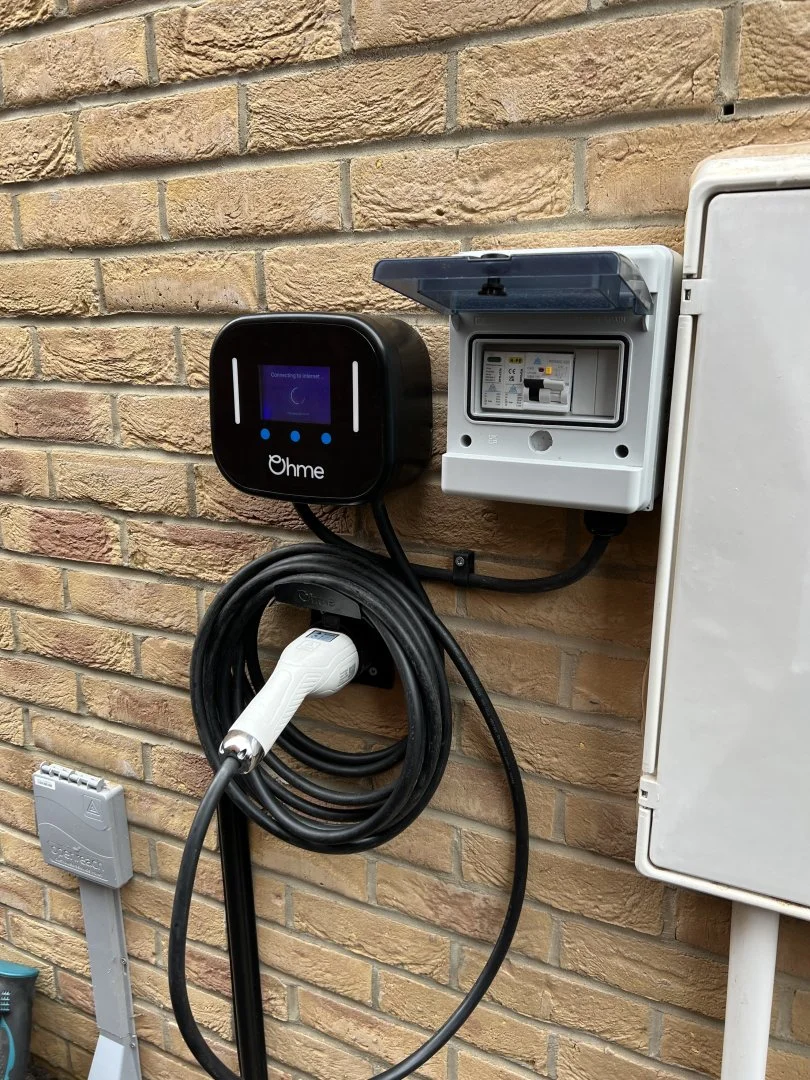
The charger must be assessed as part of the property’s electrical installation.
Ask About Connectivity and Ongoing Costs
Some models rely on Wi-Fi, mobile connectivity or an external control service for particular smart features. Ask what is included, whether a subscription is optional and which functions remain available if the connection fails. Check the actual parking location rather than assuming a strong signal inside the kitchen also reaches an external wall or detached garage.
Review warranty terms, software support and access to usage information. Consider who can authorise charging and how account access changes if you sell the house. If a particular energy tariff matters to your decision, confirm compatibility with both the charger and your circumstances before buying. A model with many functions is not automatically a better fit than a simpler unit that reliably handles the tasks you need.
Know What a Useful Handover Looks Like
Plan to be present for a demonstration, with the vehicle available if requested. Ask to practise connecting, starting, stopping and storing the cable. Find out where the isolator or other relevant controls are, without opening equipment or attempting electrical work yourself. You should leave the handover knowing which messages are normal and when to contact support.
Retain the electrical documentation, warranty details and instructions together. Confirm who to call about an equipment fault and who deals with an installation concern. Eco Energy Solutions Ltd can help households in Derby discuss practical choices before booking. Our guide to choosing a charger provides further context, but the final specification should follow the assessment of your own property and vehicle.
Summary
Choose a home charger by checking parking rights, vehicle compatibility, electrical capacity and the controls you will use. Resolve permissions and connectivity before ordering, and insist on a clear handover. See our service for Derby households to discuss a setup that fits your daily journeys.